


South Africa’s public swimming pools are vital community assets, providing recreation, relief from summer heat, and a space for sports and therapy. However, with many municipal facilities in the Nelson Mandela Bay Metropolitan Municipality (NMBM) facing vandalism and disrepair, the remaining functional pools are under immense pressure. This raises a critical question: Are these swimming pools safe for public use?
In December 2025, ASC Public Health and Food Safety Consultants conducted a microbiological assessment of functional public swimming pools in NMBM and Jeffreys Bay. This report presents our findings, identifying which facilities are safe, which pose acute health risks, and what urgent actions are needed to protect the public.
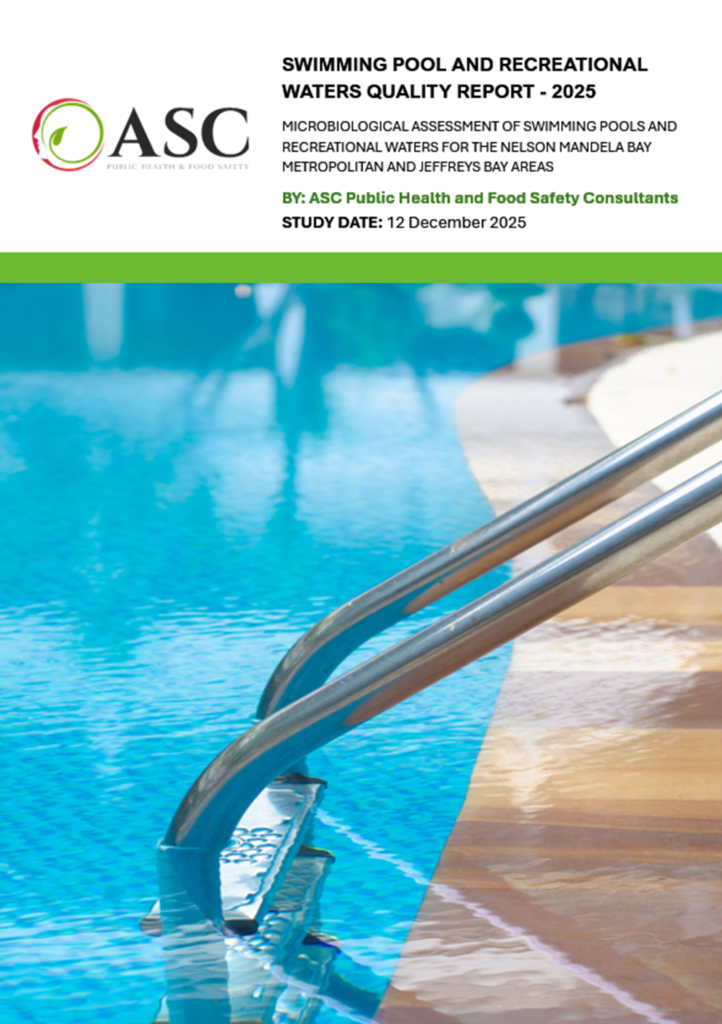
Are the swimming pools in the NMBM area and Jeffreys Bay clean enough to swim in?
FIND THE COMPLETE REPORT HEREOverview of Recreational Facilities
The study assessed the following key public swimming pools and recreational facilities:
- Nelson Mandela Bay: New Brighton, Rosedale (Kariega), Gelvandale, Malabar, James Kleinhans (Westering), and Varsvlei (Bethelsdorp).
- Jeffreys Bay: Dolphin Beach Entertainment Water Park.
Of the twenty public pools in NMBM, only nine are currently functional due to vandalism, forcing residents to overcrowd remaining facilities or travel to nearby towns like Jeffreys Bay.
Rationale of the Study
Public concern regarding the state of NMBM pools has grown following reports of derelict facilities and maintenance blunders. Contaminated recreational water can harbour pathogenic microorganisms that lead to severe illnesses. This study was initiated to evaluate whether these facilities uphold the constitutional right to a safe environment and meet national health standards.
Study Objective
The primary objective was to assess microbiological water quality by detecting and enumerating three key indicators:
- Escherichia coli (E. coli)
- Total Coliform Count
- Standard Plate Count (SPC)
Sampling Methodology
All water samples were collected in accordance with standard operating procedures to ensure sample integrity and accuracy. Our detailed sampling process and protocols are available in the study report.
Pathogen Background
- E. coli: Its presence indicates recent faecal contamination and presents an acute health risk to bathers.
- Total Coliforms: High counts suggest insufficient disinfection or bacteria growing within the filtration system.
- Pseudomonas aeruginosa: While not tested in this scope due to budget, it is a known risk in pools, causing “swimmer’s ear” and skin rashes.
Guideline Reference Values
The World Health Organization (WHO) offers broad guidelines for recreational water, including swimming pools, focusing on risk management. However, the South African drinking water standard can be used alongside the WHO guidelines.
The “Target Water Quality Ranges” are available in the report.
Swimming Pool Results
The study revealed a stark contrast in water quality, with 67% of sampled NMBM pools failing to meet safety criteria.
Comprehensive information and analysis is available in the report.
The Safe Facilities (Compliant)
- Varsvlei Swimming Pool (Bethelsdorp)
- Dolphin Beach Entertainment (Jeffreys Bay)
The High-Risk Facilities (Non-Compliant)
- James Kleinhans / Westering Pool
- Gelvandale Pool
- Malabar Pool
- Rosedale Pool (Kariega)
Analysis of Possible Influencing Factors
- Source Water Failure: Faecal contamination (sewage ingress) or pipe bursts introducing bacteria (Likelihood: VERY HIGH).
- Loss of Disinfectant: Inadequate chlorine dosing or high organic load consuming the residual (Likelihood: VERY HIGH).
- System Integrity: Biofilm sloughing within old, poorly maintained pipes (Likelihood: HIGH).
- Treatment Process: Malfunction or bypass of filtration systems at the pump station (Likelihood: HIGH).
Vulnerable Population Groups
Exposure to contaminated water can lead to gastroenteritis, skin infections, and respiratory illnesses. The following groups are at higher risk and should avoid non-compliant pools:
- Young children due to immature immune responses.
- Elderly individuals due to age-related immune degradation.
- Pregnant women at risk of systemic infections.
- Individuals with open wounds or pre-existing skin conditions.
Recommendations
In accordance with the National Health Act (No. 61 of 2003) and municipal responsibility for water
services, it is urgently recommended that the Nelson Mandela Bay Metropolitan Municipality:
- Formally notify residents in the affected areas (Gelvandale, Westering, Malabar, and Rosedale) that the water is microbiologically unsafe and advises against recreational use until further notice.
- Immediately inspect and service all the water infrastructure supplying these areas to identify sources of contamination.
- Implement regular inspections and maintenance of pump stations and stormwater outlets.
- Flush, disinfect, and re-sample the affected systems. Isolate the contaminated sections if necessary.
- Perform rigorous daily sampling and analysis in the affected zones until consistent compliance with South African and WHO recreational water guidelines is restored for a minimum period.
- Audit the maintenance, disinfection, and monitoring protocols for the entire water supply network to prevent recurrence.
11. Conclusion
The results of this study revealed a significant and immediate public health concern in parts of the
municipal water supply. Swift, transparent, and decisive action by the responsible authorities is
required to mitigate the risk of waterborne illness and restore public confidence in the safety of
municipal water and recreational spaces. The compliant pools, Varsvlei and Jeffreys Bay,
demonstrate that effective management is achievable with proper resources and oversight.
Other Studies


ASC in the News



Visit Our Media Page
Comments
Do you have any questions, comments, or suggestions? We’d love to hear from you! Please share your thoughts in the comments section below.
Feedback from our website visitors is always appreciated.