

In November 2020, FSSC 22000 published a new FSSC 22000 version to align with the latest GFSI requirements. The new FSSC 22000 V5.1 will come into effect on 1 April 2021, and all sites must be audited against Version 5.1 by 31 March 2022.
There are only a few changes in the main requirements, but there are detailed changes in the FSSC 22000 additional requirements.
The key changes are covered below.
SECTION 2.5.1: Management of Services and Purchased Materials
- Purchased materials – Firstly, the words “Purchased materials” have been added to section 2.5.1.
- Internal laboratories – In addition, Section 2.5.1 (a) emphasizes internal laboratories. The newer version requires that the laboratories used internally and externally must be deemed competent. Previously this only seemed to refer to external laboratories.
- Procurement during emergencies – Under section 2.5.1 (b), products falling under category C, D, I, G and K have a further requirement to have a documented procedure on how the organisation does its procurement during emergencies.
- Regulated substances – Section 2.5.1 (c) necessitate that the company have a policy on the procurement of animals, fish and seafood that may contain substances that are regulated, for example, heavy metals which in South Africa is regulated by Regulation R588, pesticides that are regulated by Regulation Government Notice No. R. 246 of 11 February 1994, and its subsequent amendments.
- Review process on all product specifications – Under Section 2.5.1(d), the organisation is supposed to ensure a review process followed on all product specifications to ensure that it still complies with all requirements such as product safety, integrity, legality, and customer requirements. This applies to products falling under categories C, D, I, G and K.
SECTION 2.5.2: Product Labelling

Section 2.5.2 cover additional provision for unlabelled products.
The word ALL has been added to emphasize the need to observe all statutory and regulatory requirement in the country of product origin. The labelling should take into account the allergen information and customer requirements.
SECTION 2.5.10: Storage and Warehousing Requirements
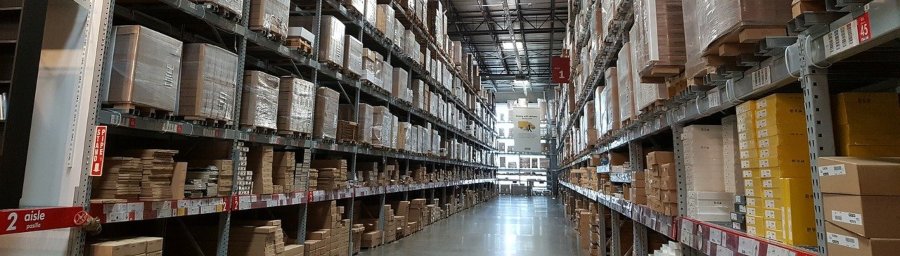
- Stock rotation system – Under Section 2.5.10(a), there must be a documented procedure specifying the stock rotation system. Also, applying the first in and first out principle for all product categories is now a requirement.
- Post-slaughter time and temperature – Under Section 2.5.10(b), it is now a requirement that the organisation must specify a post-slaughter time and temperature of products requiring freezing or chilling.
SECTION 2.5.11: Measures to Prevent Cross-contamination and Hazard Control
- Section 2.5.11 touches on measures about the prevention of cross-contamination and the control of hazards.
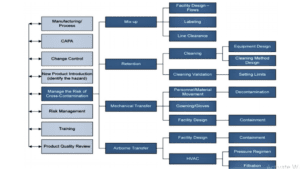
- Section 2.5.11(a) requires that organisations provide specific food packaging requirements that have a functional impact on food. This applies to food falling under category I. An example of this would be Modified Atmosphere Packaging (MAP).
- Section 2.5.11(b) requires that organisations falling under category CI must conduct facility inspections. The inspection ensures that the animals are still safe for consumption during slaughter or evisceration.
SECTION 2.5.12: Prerequisite Programmes Verification
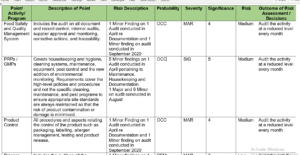
A programme to verify PRPs must be established and maintained and shall be based on risk. The risk assessment must follow the defined criteria and technical specification and ensure product safety.
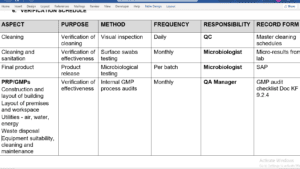
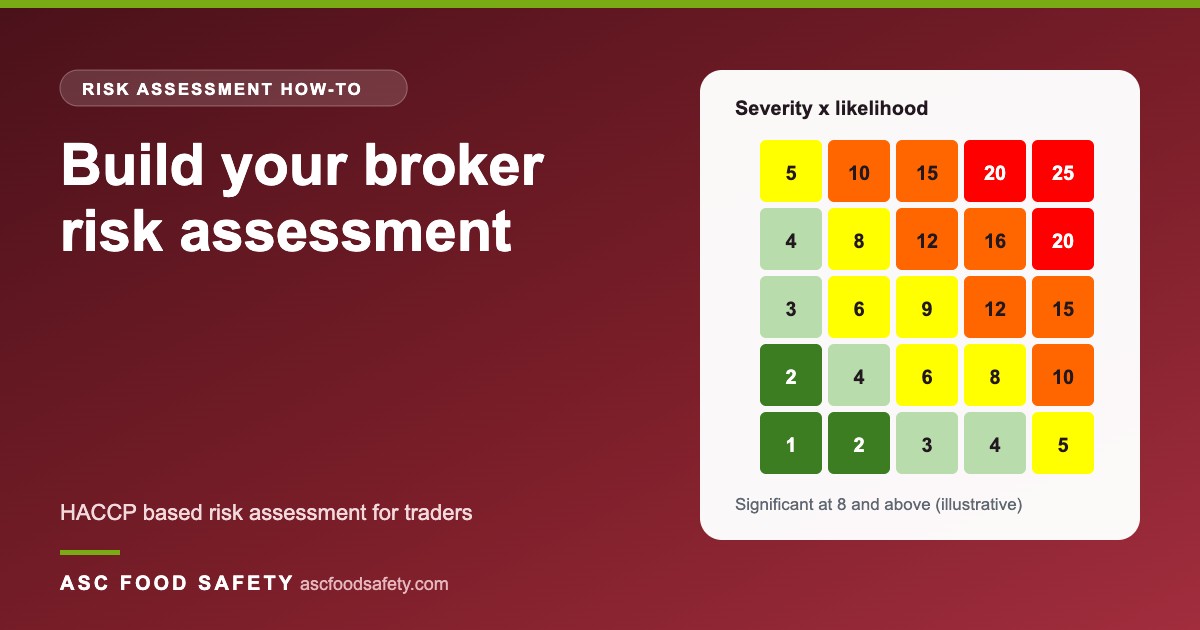
This requirement is applicable to the following food categories; C, D, E, F, I and K. The PRP verification schedule can go hand in hand with the internal audit risk assessment as shown below.
SECTION 2.5.13: Product Development
For products falling under categories: C, D, E, F, I and K, it is now a requirement that a product design and development procedure that ensures that whenever a new product is developed, its safety and legality is maintained.
Validation of the product, including its shelf life, must also be done while ensuring that it is safe during production processes.
Furthermore, the new product’s impact on existing products must be determined, including additional training and additional resources needed.
SECTION 2.5.14: Health Status (Category D)
There shall be a procedure that ensures that employees’ health has no negative impact on feed production. Employees shall undergo pre-employment medical screening and ongoing medical check-ups based on risk assessment unless they indicate otherwise.
The organisation shall observe the country’s regulatory restrictions in terms of medical screening.
SECTION 2.5.15: Multisite Certification
Additional requirements regarding the way internal audit should be conducted, report review, frequency of the audits, and internal auditors’ competency for multisite certification.
Conclusion
The main changes aim to bring FSSC 22000 inline with GFSI scheme requirements. Many of these additional requirements are already covered by some facilities.
Do you need help? ASC Food Safety Consultants specialises in all aspects of the implementation of Food Safety Management Systems like FSSC 22000. Get in touch with us.
Have a look at our complete (170+ documents) FSSC 22000 documentation templates toolkit, which includes all the requirements of the new FSSC 22000 Version 5.1.
Related Articles
Check out our other related articles for more tips!
Key facts
- FSSC 22000 Version 5.1 was released in November 2020, became effective on 1 April 2021, and required all sites to be audited against it by 31 March 2022 to align with the latest GFSI requirements.
- Section 2.5.1 expanded to cover purchased materials, competency of internal laboratories, documented emergency procurement procedures, and a policy on animals, fish and seafood that may contain regulated substances such as heavy metals and pesticides.
- Storage requirements (2.5.10) now mandate a documented stock rotation and first-in-first-out system for all product categories, plus specified post-slaughter time and temperature for products needing freezing or chilling.
- PRP verification (2.5.12) must be risk-based with defined criteria, and product development (2.5.13) must include validation, shelf-life checks, and assessment of a new product's impact on existing products.
- The version added or clarified requirements on product labelling, cross-contamination control, employee health status for feed producers, and multisite certification auditing.
- The article, written by ASC Food Safety Specialist and Lead Auditor Mthokozisi Nkosi, references South African regulations R588 (heavy metals) and R. 246 of 1994 (pesticides).
Frequently asked questions
When did FSSC 22000 Version 5.1 come into effect and by when did sites need to comply?
FSSC 22000 Version 5.1 was released in November 2020 and became effective on 1 April 2021. All sites were required to be audited against Version 5.1 by 31 March 2022. The update was made to align the scheme with the latest GFSI requirements.
What changed in Section 2.5.1 on management of services and purchased materials?
Section 2.5.1 was expanded to include purchased materials and to require that internal laboratories be deemed competent, not just external ones. It added a documented procedure for procurement during emergencies and a policy on procuring animals, fish and seafood that may contain regulated substances such as heavy metals and pesticides. A review process for all product specifications was also required for the affected categories.
What are the new storage and warehousing requirements in FSSC 22000 v5.1?
Section 2.5.10 now requires a documented stock rotation system, with the first-in-first-out principle applied to all product categories. It also requires organisations to specify a post-slaughter time and temperature for products that need freezing or chilling. These changes strengthen control over how products are stored and rotated.
How does v5.1 handle PRP verification and product development?
Under Section 2.5.12, a programme to verify prerequisite programmes must be established, maintained and based on risk using defined criteria and technical specifications, and the schedule can run alongside the internal audit risk assessment. Section 2.5.13 requires a product design and development procedure that maintains safety and legality, including validation and shelf-life checks. Organisations must also determine a new product's impact on existing products, including any additional training and resources needed.
Does the article reference South African food safety regulations?
Yes. The article cites South African Regulation R588 in relation to heavy metals and Government Notice No. R. 246 of 11 February 1994 for pesticides. It was published by ASC Food Safety Consultants, a South African company based in South End, Gqeberha, and written by Food Safety Specialist and Lead Auditor Mthokozisi Nkosi.
Thank you very much for the comment. It is much appreciated. We are glad you enjoy our website.
ASC Consultants