
GLOBALG.A.P. Water Risk Assessment for South African Farms
Water is where a lot of first GLOBALG.A.P. audits come unstuck. What IFA v6 requires, what v6.1 changes, and how a Boland fruit farm would write its water risk assessment.
ASC Food Safety Consultants
Leading with Science. Ensuring Food Safety.
Useful information dedicated to Food Safety Management Systems and the related documentation to maintain your FSMS.
Examples of popular FSMS are FSSC 22000, ISO 22000, GLOBALG.A.P., BRCGS, GMP, HACCP, etc.
Water is where a lot of first GLOBALG.A.P. audits come unstuck. What IFA v6 requires, what v6.1 changes, and how a Boland fruit farm would write its water risk assessment.
Which ISO 22002 parts your category needs under FSSC 22000 Version 7, where the old ISO/TS clauses went, and how to run the PRP gap assessment.
Your FSSC 22000 Version 7 deadline is not 30 April 2028. It is your next audit after 1 May 2027. How to find that date and work back from it.
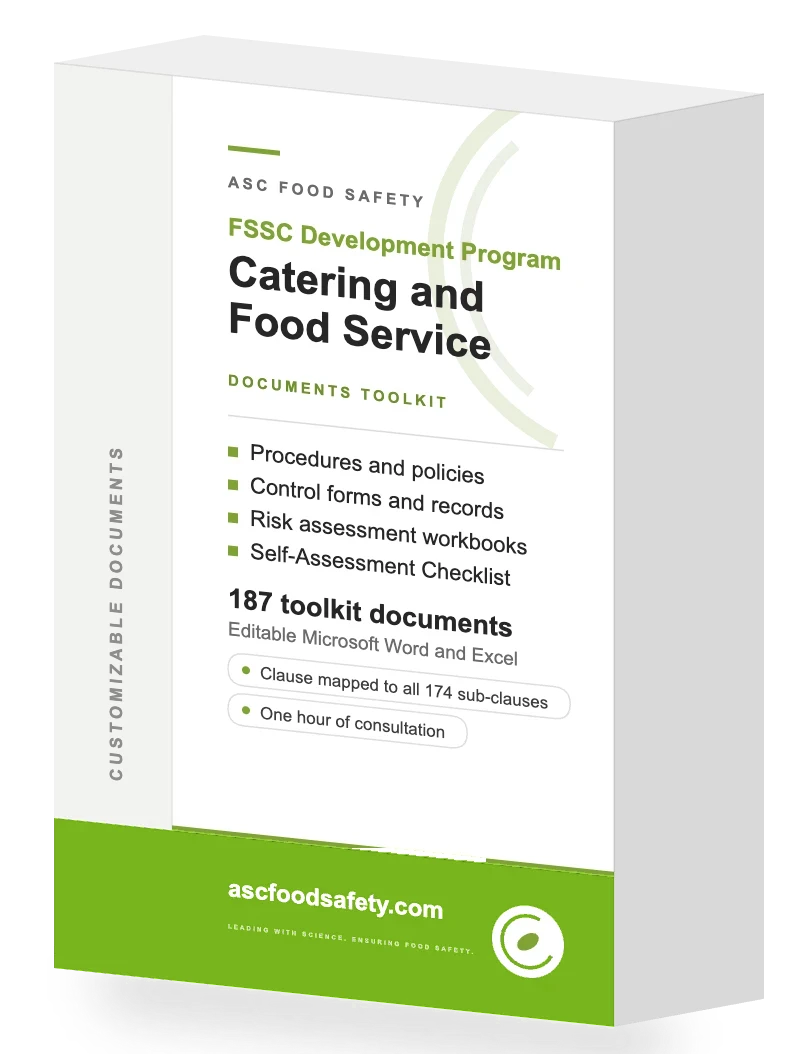
The controls and records that close the category E requirements on allergens, display, storage and transport, traceability and self service supervision for buffets, salad bars, takeaway counters and event catering.
How a restaurant and caterer sets critical limits, probe checks, corrections and records for cooking, cooling, reheating and hot holding under the FSSC Development Program and R.638 of 2018, with a worked example.
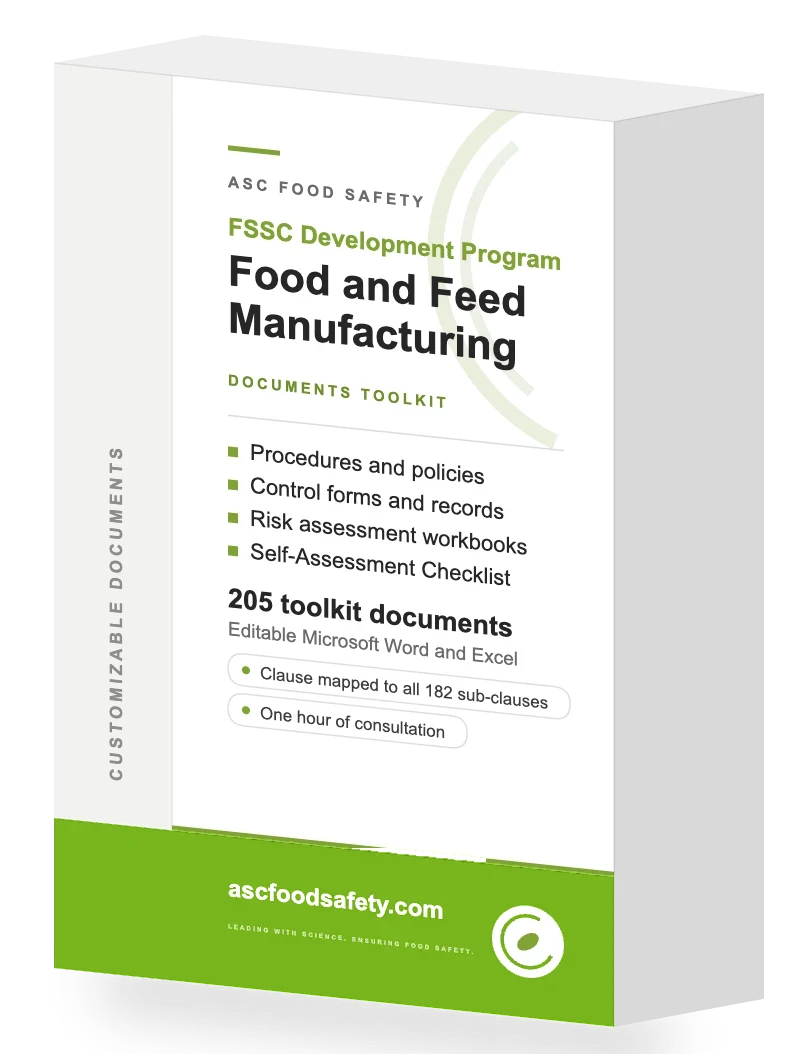
The forms, logs and registers a food or feed factory needs for an FSSC Development Program assessment, requirement 2.1 to 2.20, and what each record proves to the assessor.
A bakery HACCP study worked through the FSSC Annex 3 decision tree, with the CCPs, OPRPs, critical limits, monitoring and records the Development Program assessor will test.
The FSSC Development Program V2.0 assessment for food and feed manufacturing, covering the 182 numbered clauses in three parts, the five steps, the four places assessments are won and lost, common first-assessment gaps and the gap analysis and self assessment workbook.
The FSSC Development Program V2.0 explained: who it is for, the categories it covers, what a conformity statement gives you and what it does not, the 31 May 2026 Version 1.1 cut-off, and how to get the written system in place.
FSSC Development Program V2.0 or FSSC 22000 Version 7? How to read what your customer asked for, a side-by-side comparison of assessment, outcome and GFSI recognition, toolkit prices, and how to step up without wasting the work.

A 12-step ISO 9001:2026 transition plan for sites certified to 2015: the 30 September 2029 and 31 March 2028 deadlines, the clauses that need new evidence, who needs which training, and the gap analysis checklist.
Every document and record ISO 9001:2026 requires, clause by clause, what the 2026 edition adds that auditors will ask to see, what was never required, and where each item sits in a 202-document toolkit.

ISO 9001:2026 templates compared: writing your own, paying a consultant R7 500 to R12 500 a day, or buying a 202-document toolkit written to the 2026 edition for R5 480. Costs, risks and why 2015 templates fail.
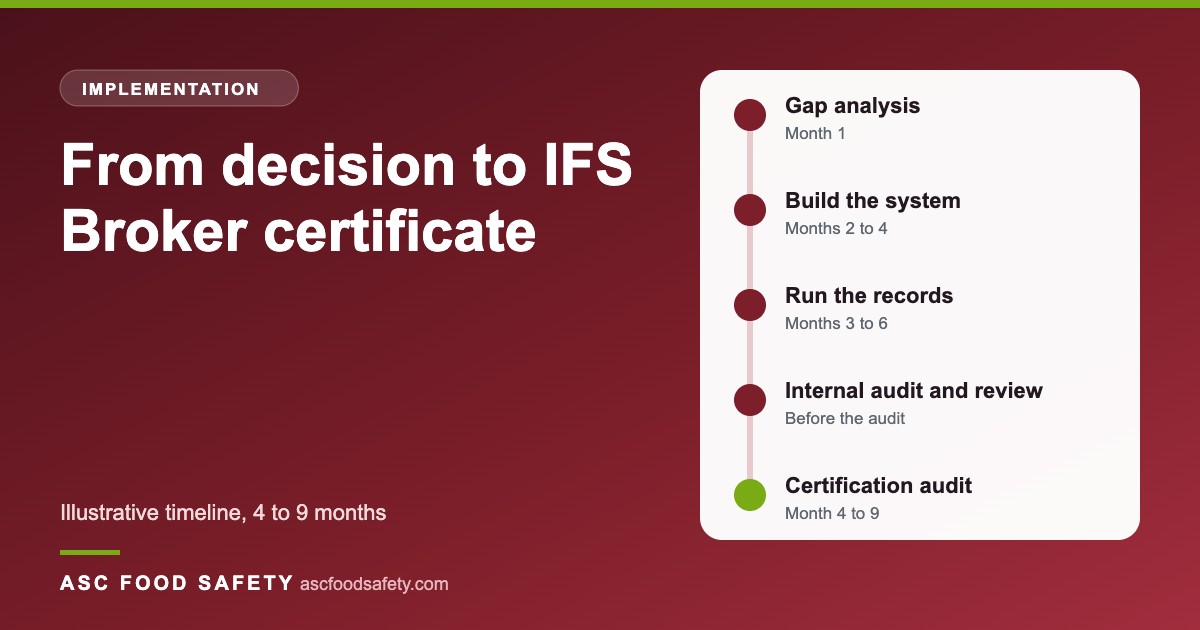
IFS Broker certification in South Africa: rollout order, realistic timelines, annual reviews due before the first audit and the unannounced audit option.
Food safety for fruit exporters and traders: residues, pathogens, mycotoxins, allergens and fraud in fruit and nut mixes, and what a broker can control.
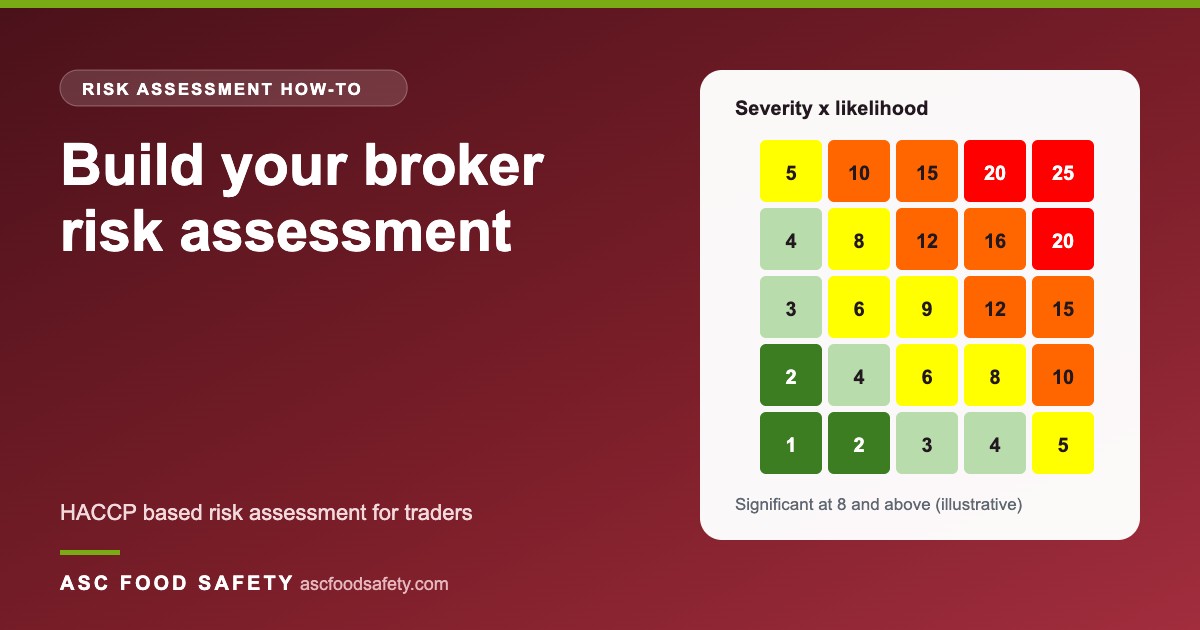
How to build an IFS Broker risk assessment for a trading company: broker steps, hazard scoring, where controls sit, validated limits and supplier approval.
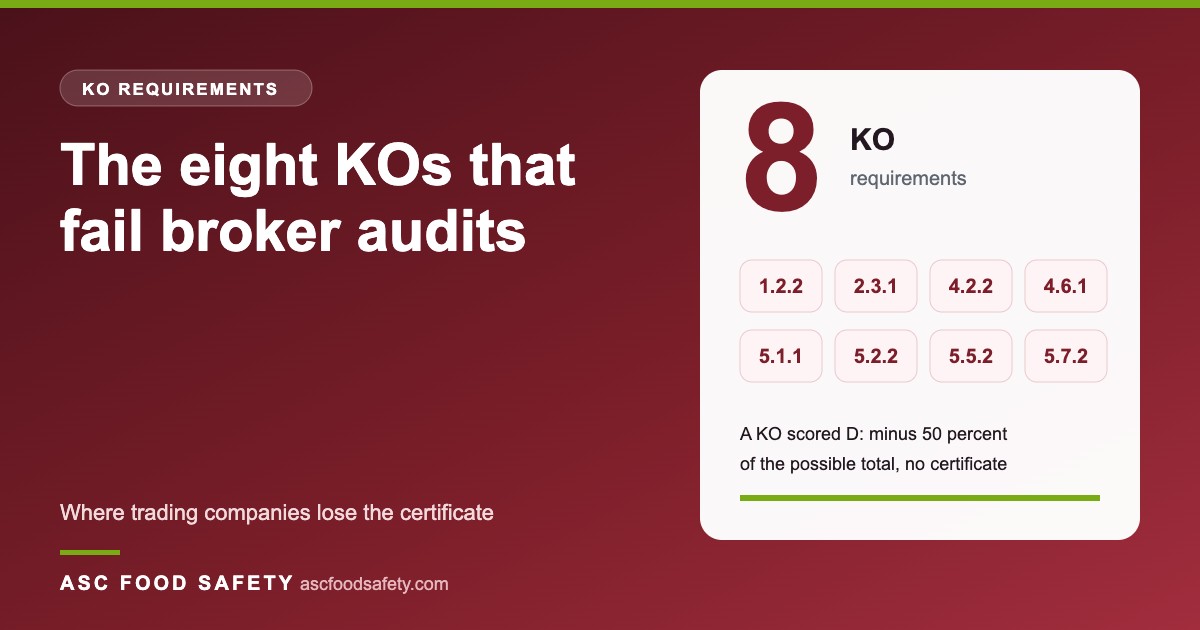
The eight IFS Broker audit KO requirements, what the auditor tests under each, the Majors trading companies pick up, and how to close them before audit.
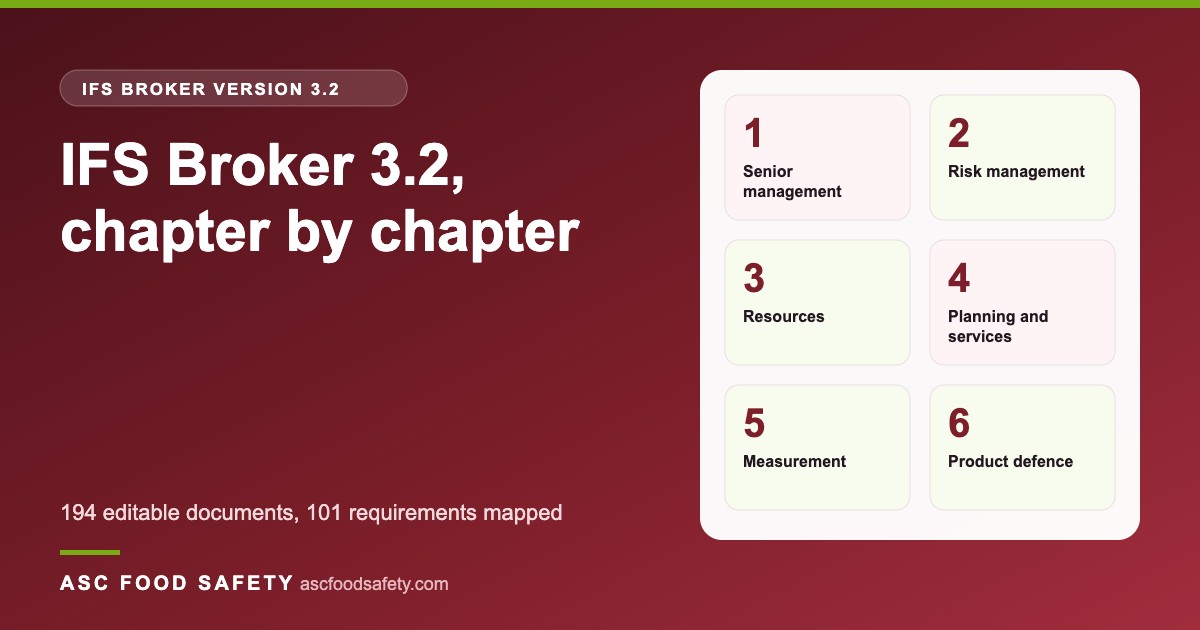
IFS Broker 3.2 requirements explained chapter by chapter: the 101 Part 2 requirements, the eight KOs and the documents a trading company needs for each.
A food safety record made at 02:00 during load shedding in a cold store with no signal is still a record the auditor will ask for. Here is honestly what works offline on a food safety app, what does not, and how to run a plant through a power cut without losing a check.
Packaging plants supplying food brands are audited to BRCGS Packaging Materials Issue 7 or FSSC 22000 for packaging, with hygiene, foreign body control, allergen and chemical migration records that paper struggles to keep. Here is how a packaging site runs it paperless.