
Part 9 of 20: Environmental Monitoring (2.5.7) Guide with Auditor Tips (FSSC 22000 V6)
Understanding environmental monitoring (2.5.7) in the FSSC 22000 V6 scheme. Learn more about each FSSC 22000 V6 additional requirement in this 20-part series!

Leading with Science. Ensuring Food Safety.
Understanding environmental monitoring (2.5.7) in the FSSC 22000 V6 scheme. Learn more about each FSSC 22000 V6 additional requirement in this 20-part series!

2025 Study conducted by ASC Public Health and Food Safety Consultants to determine the water quality and safety of swimming pools in the Nelson Mandela Bay Metropolitan and Jeffreys Bay area during the festive season.
Act No. 32 of 2000 – This by-law provides a national framework for municipalities to regulate, support, and manage township-based business activities.

2025 Study conducted by ASC Public Health and Food Safety Consultants to determine the water quality and safety of beaches in the Nelson Mandela Bay Metropolitan area during the festive season.

A well-executed audit reveals patterns, exposes blind spots, and highlights risks long before they develop

Part 8: Understanding allergen management in the FSSC 22000 V6 scheme. Learn more about the FSSC 22000 V6 additional requirements in this 20-part series!

Part 7: Understanding the requirements for the use of the FSSC logo. Learn more about the FSSC 22000 V6 additional requirements in this 20-part series!

Why BRCGS Issue 7 Training Is Essential for Packaging Manufacturers BRCGS Issue 7 is one of the most globally recognized and widely demanded standards for packaging materials. Customers expect certified facilities to demonstrate strong system controls, risk-based thinking, consistent monitoring, and full traceability. The standard is far more than a …

This training helps teams understand not only what has changed, but how to implement the changes correctly, ensuring a smooth transition and continued certification.

In creating a fair, transparent, and innovative market for substitute proteins and here is all you need to know about Plant-based Meat
The course is structured to build true competence through a progression of clear, practical, and relevant modules. From the start, we establish a strong foundation in food safety management systems.
Without this advanced competence, HACCP plans become outdated or misaligned with regulatory requirements, and organizations struggle during audits. Complex hazards, high-risk processes, allergen management, and environmental pathogen risks demand advanced analytical skills.
Learn how practical Root Cause Analysis training can equip food safety teams with the best tools to solve problems and prevent recurrence. Also see FAQs & Quiz.
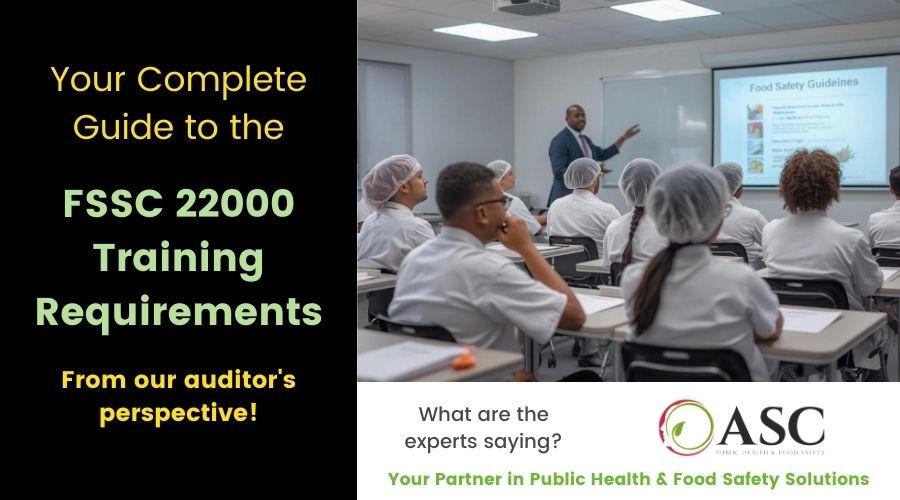
A comprehensive guide of the top 10 most essential training requirements your team needs for FSSC 22000 certification. Recommendations, FAQs and more.
(Act No. 68 of 2008 ) This South African Regulation establishes the internal enforcement functions of the National Consumer Commission by formally withdrawing its previous Enforcement Guidelines
(Act No. 61 of 2003) This South African Regulation establishes the delivery of environmental health services across a wide range of premises (including food‑handling, accommodation, public gathering places, and waste facilities), by establishing national norms and standards to protect public health and prevent environmental conditions that may constitute a health hazard.
(ACT No. 119 OF 1990) This South African Regulation governs the the quality, grading, and export requirements of oilseeds; ensuring exporters comply with updated export‑control norms, packaging, and certification to meet both domestic and international regulatory expectations
(Act No. 56 of 1974) This South African Regulation establishes the ethical conduct of registered health‑care practitioners, specifically allowing for expanded professional collaboration (e.g., partnerships between optometrists and dispensing opticians), multidisciplinary practices, and reinforcing contract-based employment in the interest of public health.
(Act no. 119 of 1990) This South African regulation primarily focuses on setting standards for the the inspection fees for agricultural product standards inspections (including food production and processing), by inviting comments on the proposed fee structure for 2026 to ensure transparency and cost‑recovery in inspection services.
(ACT No. 119 OF 1990) Government Notice No. 6774 published in Government Gazette No. 53605 on 31 October 2025.