
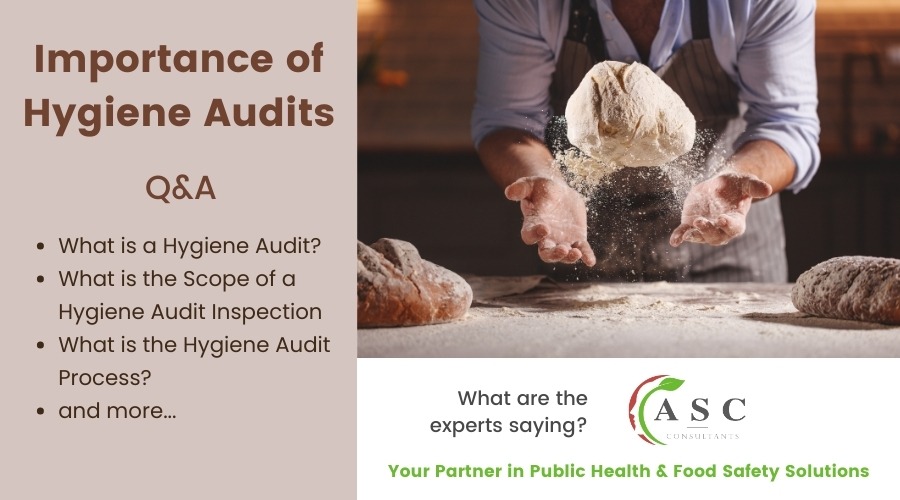
Food safety is a top priority for every establishment that deals with food, whether it’s a food business, healthcare facility, school serving meals to pupils, or company cafeterias/canteens.
Good hygiene practices play a vital role and it’s not just a legal requirement in South Africa and most other jurisdictions, but a moral obligation to ensure that the food served is safe for consumption.
One of the most effective ways to ensure safe food practices is through regular hygiene audits. These audits help identify potential risks and ensure that proper hygiene protocols are being followed. In this article, we will discuss the importance of hygiene audits and the steps involved in the audit process.
What is a Hygiene Audit?
A hygiene audit is a systematic and independent assessment of a food business’s hygiene and sanitation practices. The audit is typically conducted by a trained professional or a third-party auditor, like ASC Food Safety Consultants, and follows a standardized inspection checklist. The auditor will evaluate various aspects of the establishment to ensure compliance with food safety regulations and other relevant standards.
For example, one such standard is the ISO/TS 22002-2 standard relating to catering. (Technical Specification that specifies the requirements for the design, implementation, and maintenance of prerequisite programmes (PRPs) to assist in controlling food safety hazards in catering).
Why are Hygiene Audits Essential?
Hygiene audits are the guardians of public health in the food industry, ensuring food is handled safely from farm to fork. By identifying potential risks and areas for improvement, they help prevent foodborne illnesses and protect consumers’ health. Additionally, hygiene audits ensure businesses comply with food safety regulations, avoiding costly fines or closures, and boosting consumer confidence in the safety of the food supply chain.
Compliance with Regulations: Hygiene audits assess various aspects like cleanliness, sanitation, and proper food handling to ensure all legal requirements are met. For example, a mining company with a cafeteria needs to comply with regulations like R638 for food safety. Regular audits guarantee adherence to these guidelines.
Proactive Risk Identification: Audits identify potential risks such as improper storage temperatures. Imagine a seafood restaurant where an audit reveals the refrigerator isn’t maintaining the correct temperature, which could lead to bacterial growth. This risk can be mitigated by repairing or replacing the refrigerator.
Improved Hygiene Practices: Audits provide valuable feedback for improvement. For instance, a catering company might discover cross-contamination due to improper cutting board usage. Following an audit, the company can implement a clear separation system and train staff on proper handling practices.
Key Areas Assessed During Hygiene Audits
1. Personal Hygiene
Audits assess the personal hygiene practices of food handlers, including handwashing, proper use of gloves (where applicable), and wearing clean uniforms. Proper personal hygiene is crucial in preventing the spread of bacteria and other contaminants that can cause foodborne illnesses.
2. Food Storage and Handling
Audits evaluate the storage and handling practices of food, including proper temperature control, separation of raw and cooked foods, and appropriate labelling. Proper storage and handling practices help prevent cross-contamination, which occurs when harmful bacteria from one food item spreads to another. This ensures the quality and safety of the food.
3. Cleaning and Sanitation
Audits assess the cleanliness and sanitation practices of the food establishment, including the regularity of cleaning, use of appropriate cleaning agents, and maintenance of equipment. Proper cleaning and sanitation practices are essential in preventing the growth of bacteria on surfaces and equipment that can contaminate food.
The Hygiene Audit Process in a Nutshell
A hygiene audit is a valuable tool for businesses to proactively assess and improve their sanitation procedures. Here’s a breakdown of the typical audit process:
1. Self-Assessment: Prepare for Success
Before the official audit, take charge with a self-audit. Utilise the same checklist our auditor will use to meticulously examine your hygiene practices. This proactive approach helps identify and address any potential issues beforehand, demonstrating your commitment to hygiene.
2. On-site Inspection: A Deep Dive
During the on-site visit, our auditor will conduct a comprehensive inspection of your facility, equipment, and processes. We leverage a customised checklist to assess various aspects, for example:
- Handwashing procedures: Are proper techniques followed consistently?
- Food storage and handling: Are temperatures and practices compliant with safety regulations?
- Overall cleanliness: Does the facility meet hygiene standards throughout?
3. Documentation Review: Verifying Procedures
The auditor will delve into your documentation to ensure you have established procedures in place. This may include reviewing:
- Food safety plans: Are comprehensive plans documented and followed?
- Training records: Are staff members adequately trained on hygiene protocols?
- Cleaning schedules: Are cleaning routines established and adhered to?
4. Post-Audit Report: A Roadmap for Improvement
Following the inspection, a detailed report will be provided by our auditor. This report will highlight any areas that fall short of compliance and offer specific recommendations for improvement. You can utilise this valuable roadmap to implement the necessary changes and elevate your hygiene practices.
Conclusion
In conclusion, hygiene audits are essential for safeguarding public health and ensuring the food we consume is safe. Regular audits help food businesses identify and address potential risks, maintain compliance with regulations, and continuously improve hygiene practices.
For a safer and healthier food environment, prioritise regular hygiene audits. Consider partnering with a qualified auditor to ensure your food handling practices meet the highest standards.
Have you ever conducted a hygiene audit for your business? Let us know in the comments section below.
Related Articles
Check out our other related articles for more tips!



Key facts
- A hygiene audit is a systematic, independent assessment of a food business's hygiene and sanitation practices, carried out by trained professionals using standardised checklists.
- Audits are essential for three reasons: complying with regulations, proactively identifying risks such as improper refrigeration, and improving hygiene practices through feedback.
- Auditors assess three key areas: personal hygiene, food storage and handling, and cleaning and sanitation.
- The audit process has four steps: self-assessment, on-site inspection, documentation review, and a post-audit report.
- The post-audit report highlights areas falling short of compliance and offers specific recommendations for improvement.
- Audits can be conducted by a trained professional or third-party auditor such as ASC Food Safety Consultants, referencing standards like R638 and ISO/TS 22002-2.
Frequently asked questions
What is a hygiene audit?
A hygiene audit is a systematic and independent assessment of a food business's hygiene and sanitation practices. It is conducted by trained professionals who use standardised checklists to evaluate the facility, equipment, and processes against food safety requirements.
Why are hygiene audits important for food businesses?
Hygiene audits matter for three main reasons: they ensure compliance with regulations by checking cleanliness, sanitation, and proper food handling; they proactively identify risks such as improper refrigerator temperatures or cross-contamination; and they provide valuable feedback that improves hygiene practices.
What areas does a hygiene audit assess?
A hygiene audit assesses three key areas. These are personal hygiene (such as handwashing, glove usage, and uniform cleanliness), food storage and handling (including temperature control, separating raw and cooked food, and labelling), and cleaning and sanitation (covering cleaning frequency, appropriate cleaning agents, and equipment maintenance).
What are the steps in the hygiene audit process?
The hygiene audit process has four steps. It begins with a self-assessment using audit checklists, followed by an on-site inspection of the facility, equipment, and processes, then a documentation review of food safety plans and training records, and finally a post-audit report with recommendations for improvement.
Who conducts a hygiene audit and what regulations apply in South Africa?
A hygiene audit is typically conducted by a trained professional or a third-party auditor, such as ASC Food Safety Consultants. In the South African context, food businesses may need to comply with regulations like R638 and standards such as ISO/TS 22002-2, which sets out prerequisite programme requirements for catering.
What do you get in a post-audit report?
Following the on-site inspection, the auditor provides a detailed post-audit report. This report highlights any areas that fall short of compliance and offers specific recommendations for improvement so the business can address the identified gaps.