
 Food Allergens
Allergen Risk Assessment and Cross Contact Scoring
Regulation 43 of R146 of 2010 sets the declaration. A cross contact assessment sets the may contain. How to map routes, score them and label honestly.
ASC Food Safety Consultants
Leading with Science. Ensuring Food Safety.
Explore authoritative articles from ASC Food Safety Consultants covering food safety, HACCP, FSSC 22000, ISO 22000, food hygiene, food law, foodborne illness, environmental health, auditing, compliance and public health in South Africa. This premium archive helps readers, businesses, regulators and food sector teams find practical and current content quickly.
Food Allergens
Regulation 43 of R146 of 2010 sets the declaration. A cross contact assessment sets the may contain. How to map routes, score them and label honestly.
 Pest Control
Design the pest programme yourself instead of signing the contractor's proposal. Device types, densities, frequency, trend review and the file an auditor opens.
 Food Safety and Quality for Consumers
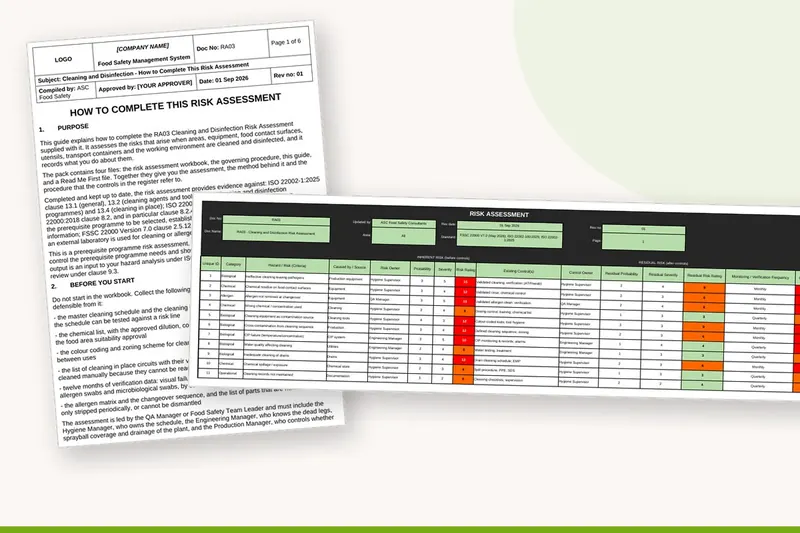
Justify cleaning frequency, method, chemical and contact time on evidence, not habit. Scoring, CIP and COP, allergen validation. RA03 pack R690.
 Food Safety Toolkits
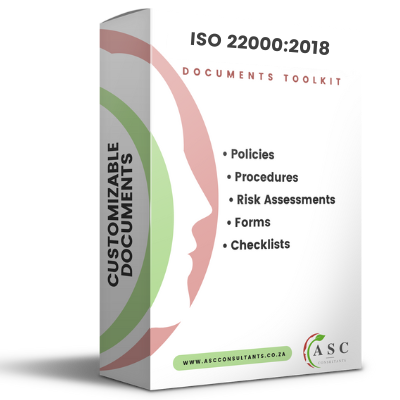
What a documented FSMS really contains, what the three build routes cost, and which toolkit fits your standard. Toolkits from R699, FSSC 22000 at R6,350.
 HACCP
HACCP
A hazard analysis and a risk assessment are different documents, and auditors raise findings when sites confuse them. The difference, with a worked example.
 Food Safety and Quality for Consumers
BRCGS, FSSC 22000 and IFS all demand documented risk assessments. The 24 an auditor asks for, the clause behind each, and where sites lose marks. Packs R690.
ASC Food Safety Consultants supports businesses across South Africa with food safety consulting, HACCP support, auditing, hygiene audits, FSMS implementation, compliance guidance, training and public health expertise.
The ASC Food Safety blog publishes articles on food safety, HACCP, ISO 22000, FSSC 22000, food hygiene, auditing, food law, public health and compliance in South Africa. It is for food business owners, QA and QC professionals, food handlers and students who want practical, current guidance from accredited food safety experts. Updated regularly by ASC Food Safety Consultants. Read the latest articles to stay informed and compliant.
The South African food safety blog covers HACCP, ISO 22000, FSSC 22000, BRCGS, GLOBALG.A.P., food hygiene, internal and supplier auditing, food law and Regulation R638, public health, environmental health and broader compliance topics. Articles translate standards and legislation into practical guidance for food businesses, QA teams and food handlers working in the South African food industry.
Yes. All blog articles are free to read. The blog is part of ASC Food Safety Consultants' free resources, designed to help food businesses, professionals and students stay informed about food safety best practice, standards updates and compliance requirements in South Africa, without any subscription or payment.
ASC publishes new food safety articles regularly, covering standards updates, regulatory changes, seasonal hygiene risks and practical how-to guidance. Following the blog is a useful way for South African food businesses and QA professionals to keep up with developments in HACCP, FSSC 22000, ISO 22000 and food law, and to pick up actionable tips between formal training.
Articles are written by ASC Food Safety Consultants' team of food safety specialists, auditors and trainers, drawing on hands-on experience implementing HACCP, ISO 22000, FSSC 22000 and BRCGS systems across South Africa. This means the content reflects current standards and real-world implementation challenges faced by local food businesses, not just theory.
The blog is a helpful starting point for understanding standards such as FSSC 22000, ISO 22000 and BRCGS and what certification involves. For full preparation, combine it with ASC's accredited training, editable FSMS document toolkits and consulting support, which provide the structured guidance and documentation needed to achieve audit and certification readiness in South Africa.
Yes. The blog regularly addresses South African food safety legislation, including Regulation R638 governing general hygiene requirements for food premises, agricultural product standards and meat safety law. Articles explain what these requirements mean in practice for food handlers, persons in charge and food businesses, helping readers understand and meet their legal obligations.